
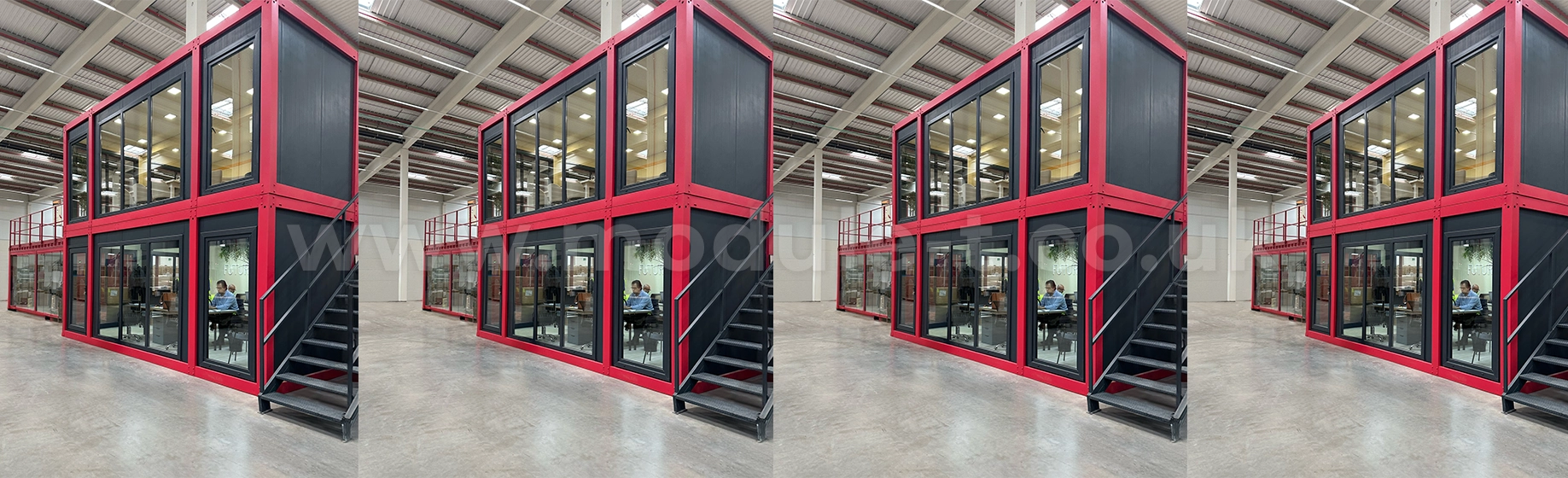
A flat pack office cabin is a prefabricated workspace delivered in a compact, unassembled form for assembly at its destination. Its building components are manufactured before delivery, while the final assembly takes place on site. For businesses considering an additional office, the key question is whether this delivery format fits the available access, installation resources and project programme.
Module-T UK offers flat-pack and pre-assembled modular cabin solutions. This guide explains how the flat-pack approach works, what to consider before choosing it and how to specify an office that supports everyday work.
What Is a Flat Pack Office Cabin?
“Flat pack” describes the way a cabin is supplied. “Office” describes its intended use. Once assembled, the building provides an enclosed workspace, with the layout and equipment determined by the agreed specification.
The structure, panels, openings and connections are designed as parts of a building system. The exact package varies, so the supplier should identify which components arrive separately, which arrive pre-fitted and what work remains at the destination.
A flat pack office cabin may be considered for site administration, a business yard or additional workspace during refurbishment. Suitability depends on the building configuration and local conditions, rather than the delivery label alone.
Flat-Pack or Pre-Assembled: What Changes?
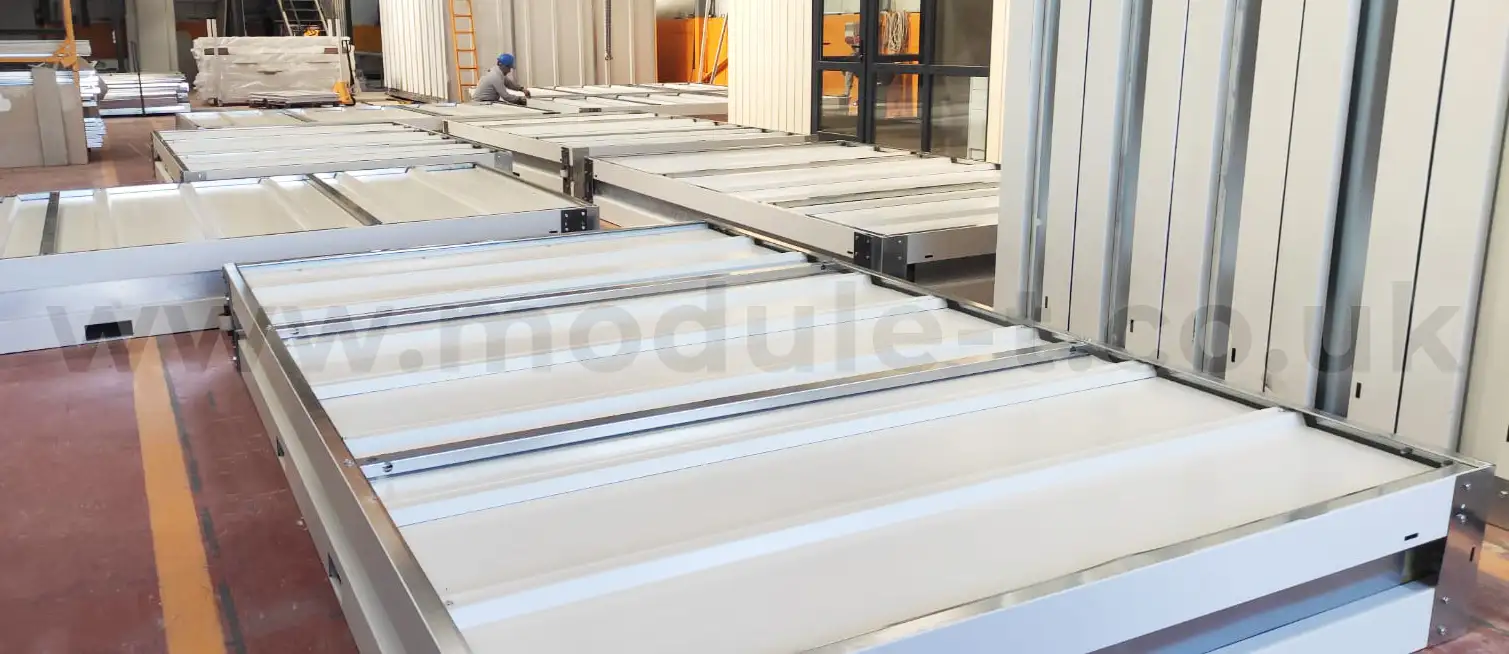
The main difference is how much building assembly takes place at the destination. A pre-assembled cabin arrives as a substantially completed unit. A flat-pack solution requires the building components to be assembled before the office can be brought into use.
| Question | Flat-pack cabin | Pre-assembled cabin |
|---|---|---|
| What arrives? | A packaged building system for assembly. | A substantially assembled cabin. |
| What must the site accommodate? | Unloading, component handling and an assembly area. | Access and positioning arrangements for the assembled unit. |
| What work remains? | Assembly, finishing and the agreed site connections. | Positioning, final checks and the agreed site connections. |
| What should be compared? | Transport, assembly resources and the complete installation scope. | Transport, lifting and the complete installation scope. |
Flat-pack packaging can reduce transport volume, particularly when several units are involved. However, the final comparison should include the assembly work required at the destination. Neither format is automatically the better choice for every project.
When Is a Flat Pack Office Cabin Worth Considering?
When Access Needs a Different Approach
If moving a complete cabin to its intended position is difficult, ask whether a packaged system offers a workable alternative. Provide the dimensions of the access route and proposed working area.
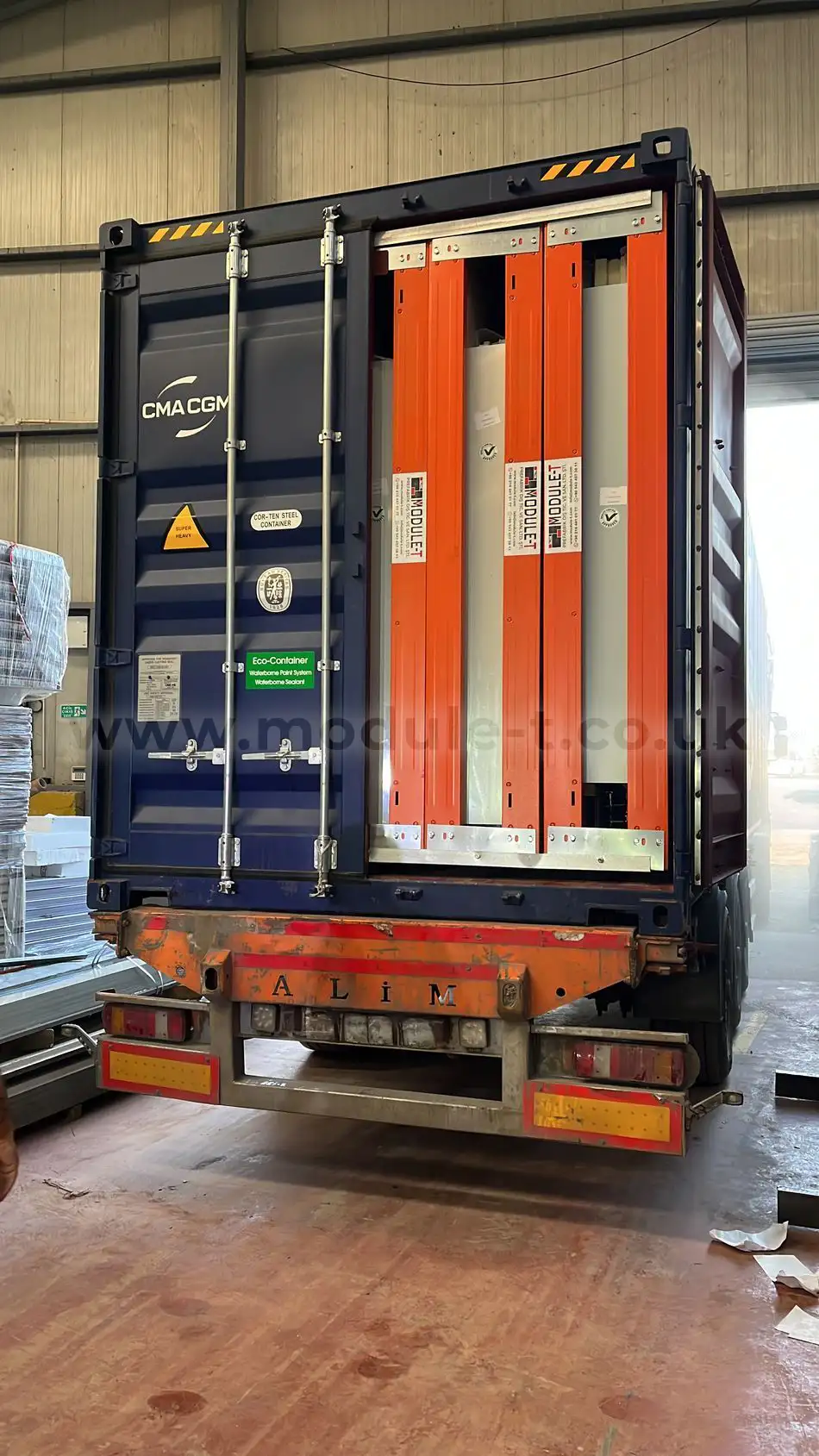
The individual packages still need to reach the site and be handled appropriately. Confirm package sizes, weights and equipment requirements rather than assuming every component can be carried through a narrow opening.
When Several Offices Are Being Planned
For a project requiring multiple units, examine transport and assembly together. The site may benefit from a planned sequence in which components are received, stored and assembled in the order needed.
Explain which offices must be operational first. This helps the supplier and installation team assess the delivery format against the programme.
When Future Relocation Matters
If an office may move to another project, discuss this before ordering. Ask how the selected system would be dismantled or relocated and what preparation, replacement materials or specialist work could be required.
Module-T UK describes installation and relocation support on its modular cabin services page. The applicable scope should be confirmed for the chosen building.
How Does On-Site Assembly Work?
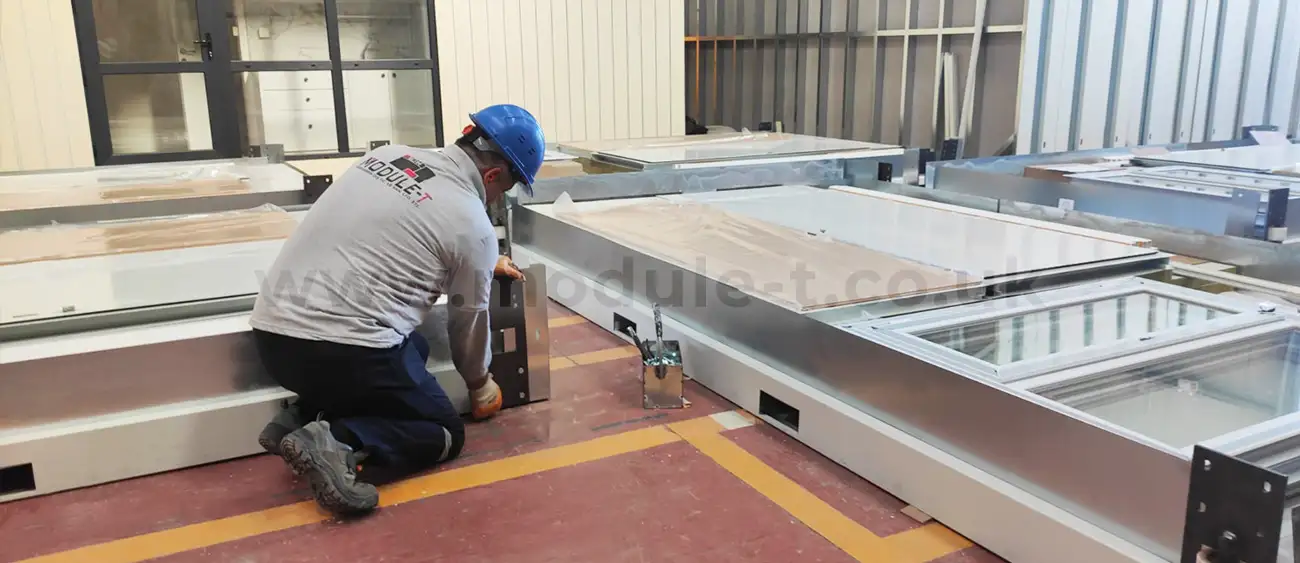
Assembly follows the selected building system’s drawings and instructions. At planning level, the process involves preparing the installation area, checking the delivered components, assembling the structure and enclosure, completing the specified fittings and arranging the final connections and checks.
This is a project overview, not a universal installation sequence. The supplier’s instructions determine the order of work, fixing methods, equipment and personnel required.
Before delivery, establish who is responsible for each stage. The quotation should make clear whether assembly labour, handling equipment, finishing materials and service connections are included. Also agree where components can be stored and who will check the delivery against the packing list.
Our modular building delivery guide covers access and site preparation in more detail.
Specify the Office Before Finalising the Package
A practical flat pack office cabin begins with a clear working brief. Identify permanent workstations, meeting needs, storage and any activities requiring separate rooms. Then review a layout showing furniture, doors and circulation space.
For example, a supervisor who regularly receives visitors may need a different arrangement from two colleagues working at adjacent desks. If telephone calls require privacy, discuss separate rooms rather than relying only on a larger floor area.
Use our site office selection guide to compare working arrangements. Within the product range, the OC-A6000.3 office layout illustrates two offices with a central kitchenette. Confirm the available delivery format and included equipment for any model you shortlist.
Plan Comfort and Connections Together
For a portable office cabin, review the insulation specification alongside heating, ventilation and the intended working hours. Flat-pack delivery does not, by itself, establish thermal performance or year-round suitability.
Fresh air needs particular attention in an occupied office. The HSE guidance on workplace ventilation explains how natural and mechanical ventilation can provide fresh air. Discuss the proposed occupancy and room arrangement when selecting the approach.
List computers, printers and other equipment before agreeing electrical and data points. If the layout includes a kitchenette or sanitary facilities, clarify the necessary water and wastewater arrangements. Confirm who provides the external connections and when these will be completed.
What Should Your Quotation Cover?
Compare quotations against the same office brief. Ask for the building package, optional equipment, transport, unloading, assembly and site connections to be clearly identified. Check exclusions as carefully as the included items.
Send Module-T UK your intended use, preferred layout, delivery postcode, access information and required date. Browse our office containers for layout ideas, then request a quotation covering the appropriate specification and delivery format.
Frequently Asked Questions
Can a flat pack office cabin be assembled without specialist help?
The required skills and equipment depend on the system. Confirm the installation requirements with the supplier before making labour or handling arrangements.
Is a flat-pack office ready to use immediately after assembly?
Building assembly is one stage. The agreed connections, checks and any remaining equipment installation must also be completed before occupation.
How long does assembly take?
Timing depends on the model, configuration, site conditions and installation resources. Request a project-specific programme covering assembly and the remaining work needed to make the office operational.