
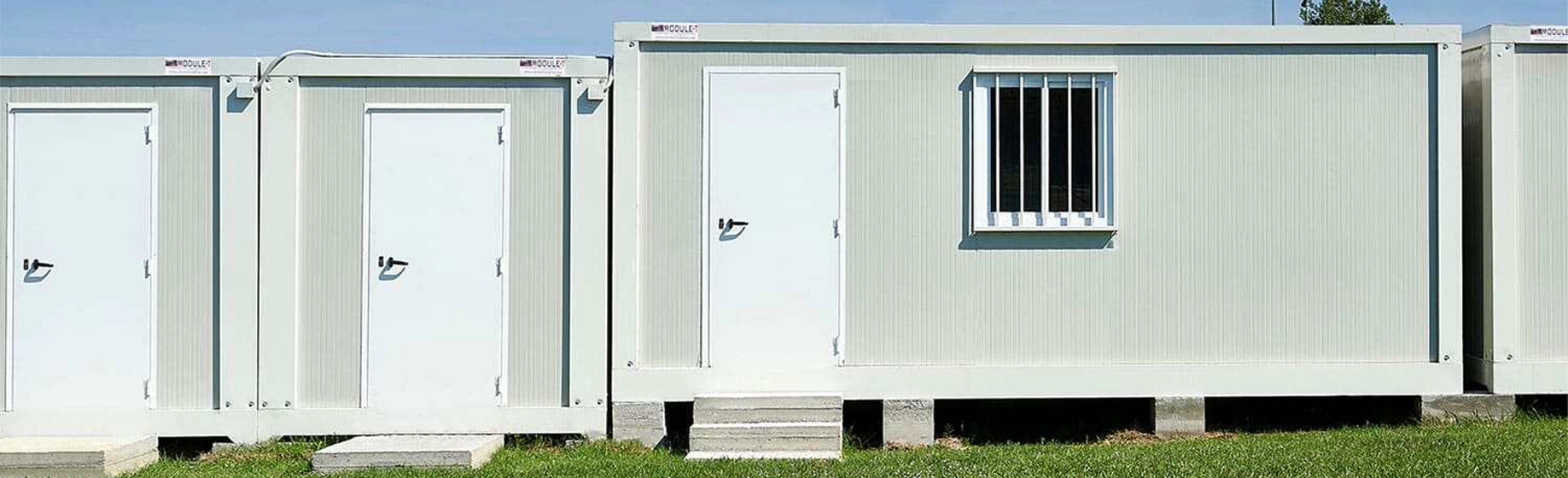
There is no standard list of construction site cabins that works for every project. A small refurbishment and a multi-phase construction site may both need an office and toilet facilities, but the number, size and layout of those units can be completely different.
The better approach is to look at how the site will actually operate. How many people will be there at peak periods? Who needs desk space? Will workers need to change or shower? How far are the welfare facilities from the working areas? And does the entrance need to be monitored throughout the day?
Answering those questions before ordering your site cabins makes it much easier to build a practical site setup rather than adding facilities one by one as problems appear.
There Is No Standard Site Compound
Construction projects change considerably between mobilisation and completion. A site that begins with a project manager and a small groundworks team may later accommodate several trades, subcontractors, engineers and visitors at the same time.
This is why construction site accommodation should be planned around the expected peak workforce, not simply the number of people present during the first week.
Location matters as well. The Health and Safety Executive advises that welfare facilities should be considered at an early stage and positioned so workers can reach them easily. On larger sites, additional facilities may be necessary where teams work a significant distance from the main compound.
You can review the HSE guidance on construction welfare when planning the overall site setup.
Start With the Site Office
The site office is usually the operational centre of the project. It is where drawings are reviewed, deliveries are coordinated, paperwork is completed and meetings take place.
For a small project, a compact office with one or two workstations may be enough. As the management team grows, the same arrangement can quickly become crowded.
Module-T UK offers office containers in different layouts, including compact 7.2 m² offices and 14.4 m² configurations with shared or separated working areas. That allows the internal layout to be selected according to how the team works rather than simply choosing the largest unit available.
If supervisors need privacy for calls or commercial discussions, two separate work areas may be more useful than one large open room. If coordination meetings are frequent, meeting capacity should be planned from the beginning.
In other words, temporary office cabins should be selected by function first and floor area second.
Toilets and Washing Facilities Need to Match the Workforce
Toilets are not an optional addition to be considered once the project is under way. HSE guidance states that everyone working on a construction site must have access to appropriate toilet and washing facilities.
The right configuration depends on workforce numbers, available services and the type of work being carried out. A small team may only need a compact unit, while a busy site may require multiple toilet compartments, washbasins and additional units positioned around the project.
Module-T UK supplies toilet cabins in several configurations, including double toilets, toilet-and-shower layouts and accessible models.
When selecting a portable toilet cabin, check more than its external dimensions. Water supply, wastewater arrangements, cleaning access and the distance workers need to travel all affect whether the unit will work well in practice.
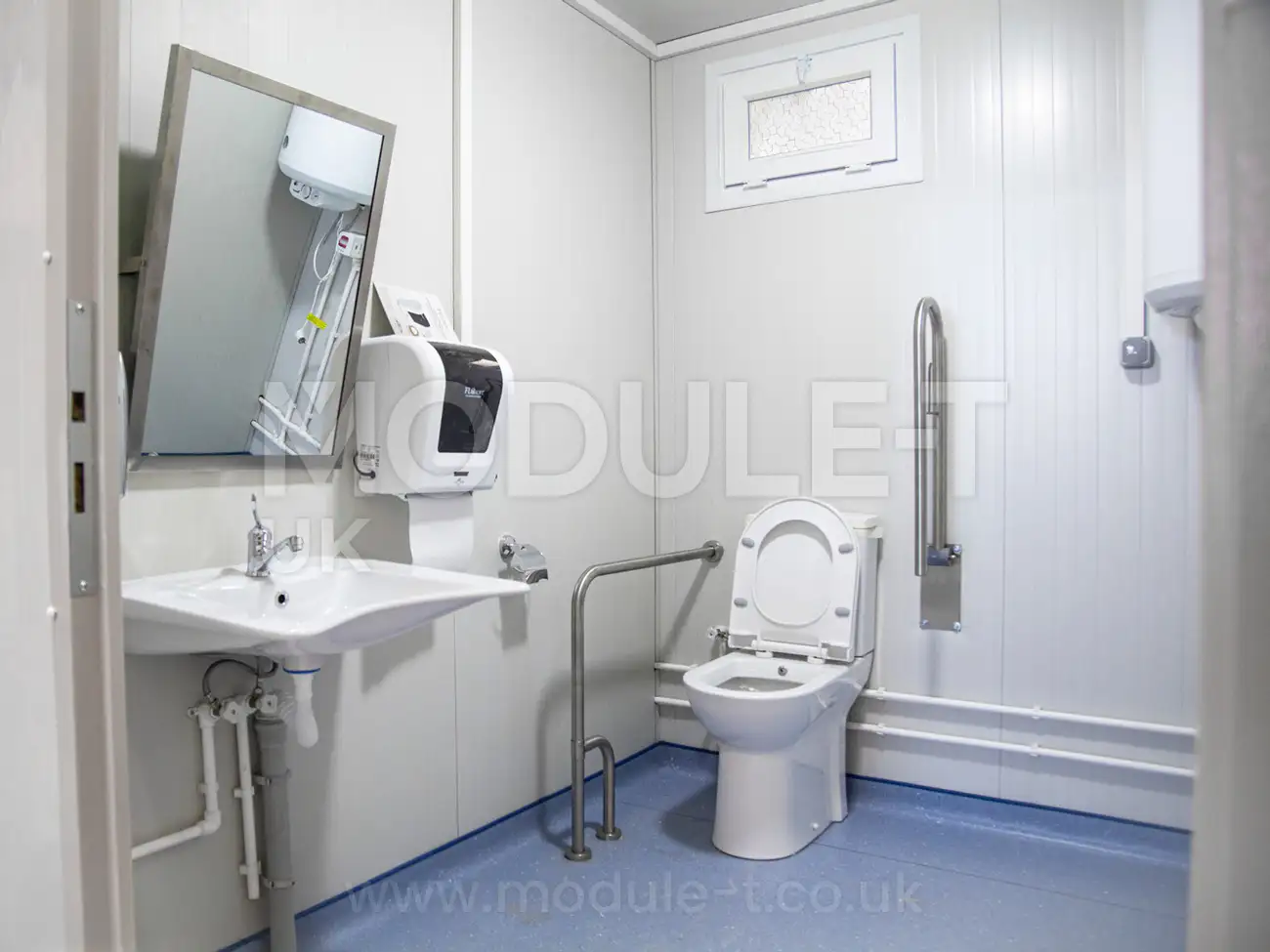
Accessible construction site toilet cabin with washbasin and support rails
Some Sites Need More Than Toilets
The nature of the work should determine whether changing and shower facilities are also required.
Construction involving heavy dust, mud, contaminated materials or other substances may create a greater need for washing and changing facilities. HSE guidance also notes that additional facilities such as showers may be necessary depending on the risks associated with the work.
A dedicated changing room gives workers somewhere to change, store clothing and keep personal belongings away from the working area. Depending on the configuration, lockers, benches, showers, washbasins and toilets can be combined within the same unit.
It is worth thinking about wet clothing as well. A room full of lockers is not automatically a good changing facility if damp workwear has nowhere suitable to dry.
Security Cabins Can Simplify the Site Entrance
Not every project needs a dedicated security cabin, but on controlled or busy sites it can solve several problems at once.
Positioned near the entrance, a security cabin can provide a fixed point for visitor registration, vehicle checks, deliveries and access control. It also keeps these activities away from the main site office, where the project team may already be dealing with day-to-day operations.
Visibility is particularly important. Window positions should allow the person inside to monitor approaching vehicles and pedestrians without requiring the cabin to occupy more space than necessary.
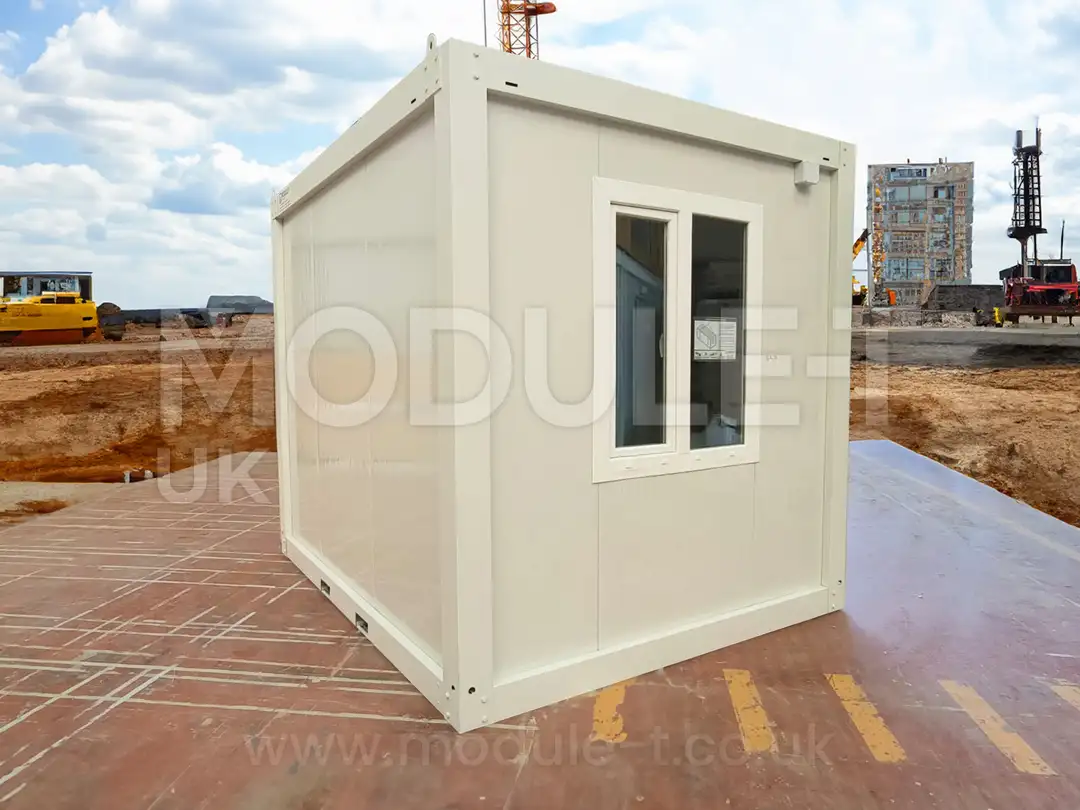
Compact security cabin installed on a construction site
Should Everything Be Combined Into One Cabin?
Sometimes combining functions makes sense. On a smaller site, office space and limited welfare facilities may fit comfortably within one larger unit. A changing room may also incorporate showers and toilets.
On a larger project, however, asking one cabin to do too much usually creates compromises. An office that doubles as a break area becomes difficult to use for meetings. A changing room without enough space around the lockers becomes congested at shift changes. Toilets positioned for convenience near one working area may be too far away from another.
Separate site welfare cabins can provide more flexibility, particularly where facilities need to be distributed around a large site or moved as construction progresses.
Use the Peak Workforce to Plan Capacity
One of the most common planning mistakes is sizing the site compound around the workforce present at mobilisation.
Instead, look at the construction programme and identify when the largest number of people will be working on site. Then consider how many of them are likely to use each facility at the same time.
| Site Requirement | Cabin to Consider | Key Question |
|---|---|---|
| Project management | Office container | How many people need permanent workstations? |
| Toilets and handwashing | Toilet cabin | What is the peak workforce and where are they working? |
| Changing and personal storage | Changing room | Do workers need lockers, benches or drying space? |
| Washing after work | Shower or combined changing unit | Does the type of work make showers necessary? |
| Controlled access | Security cabin | Does the entrance need continuous supervision? |
This approach is more useful than trying to calculate the site from a generic list of cabin types.
Plan Where the Cabins Will Go Before They Arrive
The location of construction site cabins affects both their usefulness and the cost of installing them.
Office units should be accessible without placing visitors directly in active work areas. Toilets and changing facilities should be close enough to encourage regular use. Security cabins normally work best near the controlled entrance.
Utility connections also influence the layout. Toilets, showers and washbasins need suitable water and wastewater arrangements, while offices, security cabins and welfare facilities require electricity.
Delivery should be considered at the same stage. A suitable position is of little value if a delivery vehicle or lifting equipment cannot safely reach it.
Leave Room for the Site to Change
Construction sites are temporary environments, but they are rarely static.
Access routes move. Work zones expand. New subcontractors arrive. Areas that were available for welfare facilities during the first phase may later be needed for storage or construction activity.
Modular site cabins can help because units can be planned individually and, where appropriate, repositioned or supplemented as the project develops.
If the programme suggests that workforce numbers will increase significantly, it is worth reserving space for additional units from the beginning rather than forcing the original compound to operate beyond its practical capacity.
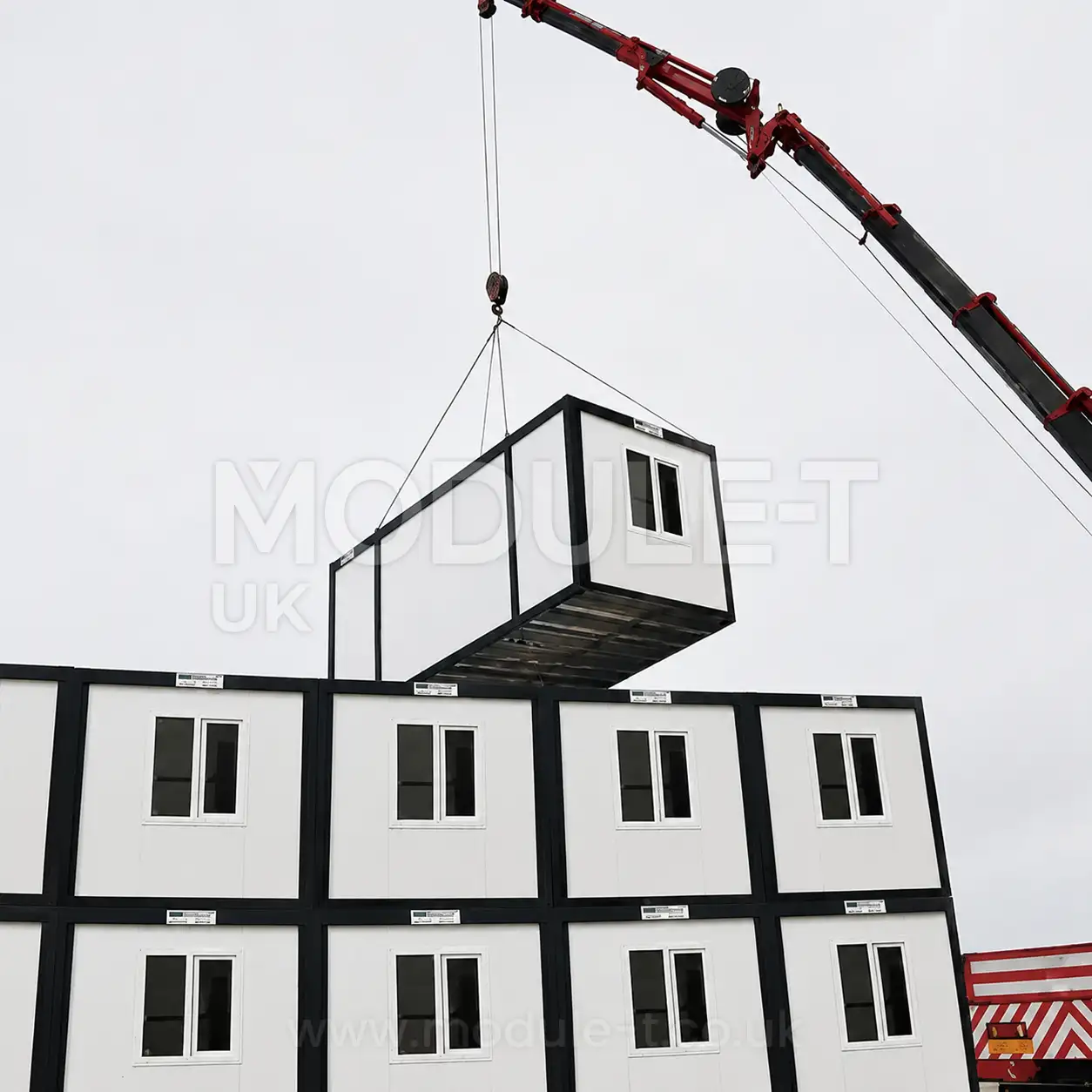
Modular site cabin being lifted into position during site expansion
What Should You Tell the Supplier?
A useful quotation request should describe the project rather than simply ask for “three cabins”.
Before contacting a supplier, prepare:
- the site address and delivery postcode;
- the expected peak workforce;
- the number of permanent office users;
- the required toilet and washing facilities;
- whether changing rooms or showers are needed;
- accessibility requirements;
- available water, drainage and electricity;
- site access restrictions;
- the preferred installation area;
- the expected delivery date.
With this information, the supplier can recommend a combination of units based on the way the site will actually operate.
Build the Site Around the People Using It
The right mix of construction site cabins is different for every project. A small team may need little more than a practical office and suitable toilet facilities. A larger site may require dedicated offices, changing rooms, showers, additional toilets and a security cabin at the entrance.
The important part is to plan these spaces together. Workforce numbers, working conditions, site layout and utilities should determine the configuration rather than adding cabins only when a shortage becomes obvious.
Module-T UK supplies modular site buildings for construction projects, including office containers, toilet and shower cabins, changing rooms and security cabins. Share your workforce numbers, required facilities and delivery location with our team to identify a suitable setup for your project.
Frequently Asked Questions
What cabins are normally needed on a construction site?
Most sites require appropriate office and welfare facilities. Depending on the project, this can include office containers, toilet cabins, changing rooms, showers and security cabins. The exact combination depends on workforce size, site conditions and the work being carried out.
How many welfare cabins does a construction site need?
There is no single number that applies to every project. Capacity should be based on the workforce, the type of work, the facilities provided and how far workers need to travel to reach them. Large or dispersed sites may require facilities in more than one location.
Can toilets, showers and changing rooms be combined?
Yes. Combined configurations can include changing space, showers, washbasins and toilets within one modular unit. Whether this is preferable to separate cabins depends on workforce numbers and the available site space.
Can more site cabins be added later?
Yes. One advantage of modular site accommodation is that additional units can be introduced as the project changes, provided suitable space, access and service connections are available.