
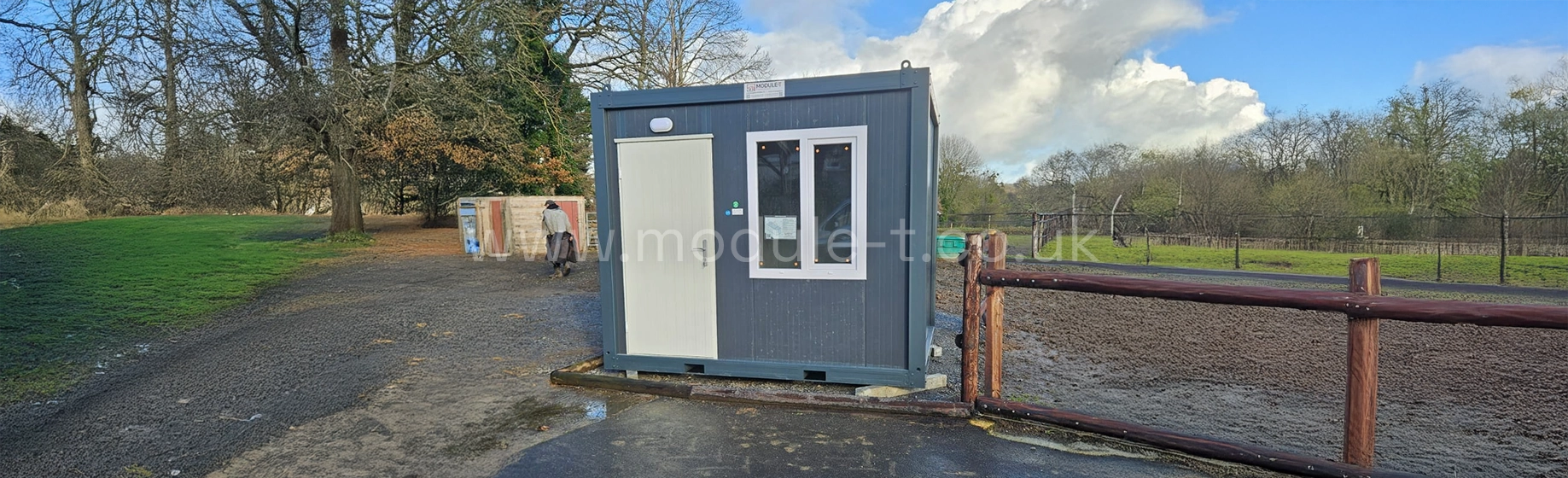
Do portable cabins need planning permission? Sometimes they do, and sometimes they do not. That is why this question causes so much confusion for contractors, business owners and site managers across the UK.
Many people assume that if a building is described as portable or temporary, it can simply be delivered, placed on site and used straight away. In reality, the planning position depends on how the cabin will be used, where it will be installed, how long it will remain in place and whether it is linked to active construction work.
If you are considering a site office, security cabin, welfare unit, changing room or another modular solution, it is worth checking the planning position before you place the order. It is far easier to confirm the rules in advance than to deal with delays or enforcement issues after installation.
There Is No One Rule That Covers Every Portable Cabin
The most important thing to understand is that planning permission is not decided by the word “portable”. Two cabins can look almost identical yet fall into completely different planning situations.
For example, a temporary site office installed on an active construction project may be treated differently from an office cabin placed permanently in the yard of an existing business. The product might be the same, but the context is not.
That is why it is better to think about planning in terms of use, location and duration, rather than focusing only on the structure itself.
When a Portable Cabin May Not Need Planning Permission
In England, certain temporary buildings and moveable structures can fall within permitted development rights when they are genuinely required in connection with works being carried out on the land or adjoining land. This is the part that often applies to active construction sites.
In practical terms, this can cover situations where a project needs temporary accommodation such as a site office, welfare cabin, changing room or security unit for the period of the works. However, this should never be treated as a blanket rule that automatically applies to every project.
The details still matter. The cabin must be there because the works require it. It should be temporary in purpose, and its continued presence after the works have ended may raise a different planning question altogether.
If you want formal confirmation that planning permission is not required, it may be sensible to speak with the local planning authority or apply for a lawful development certificate.
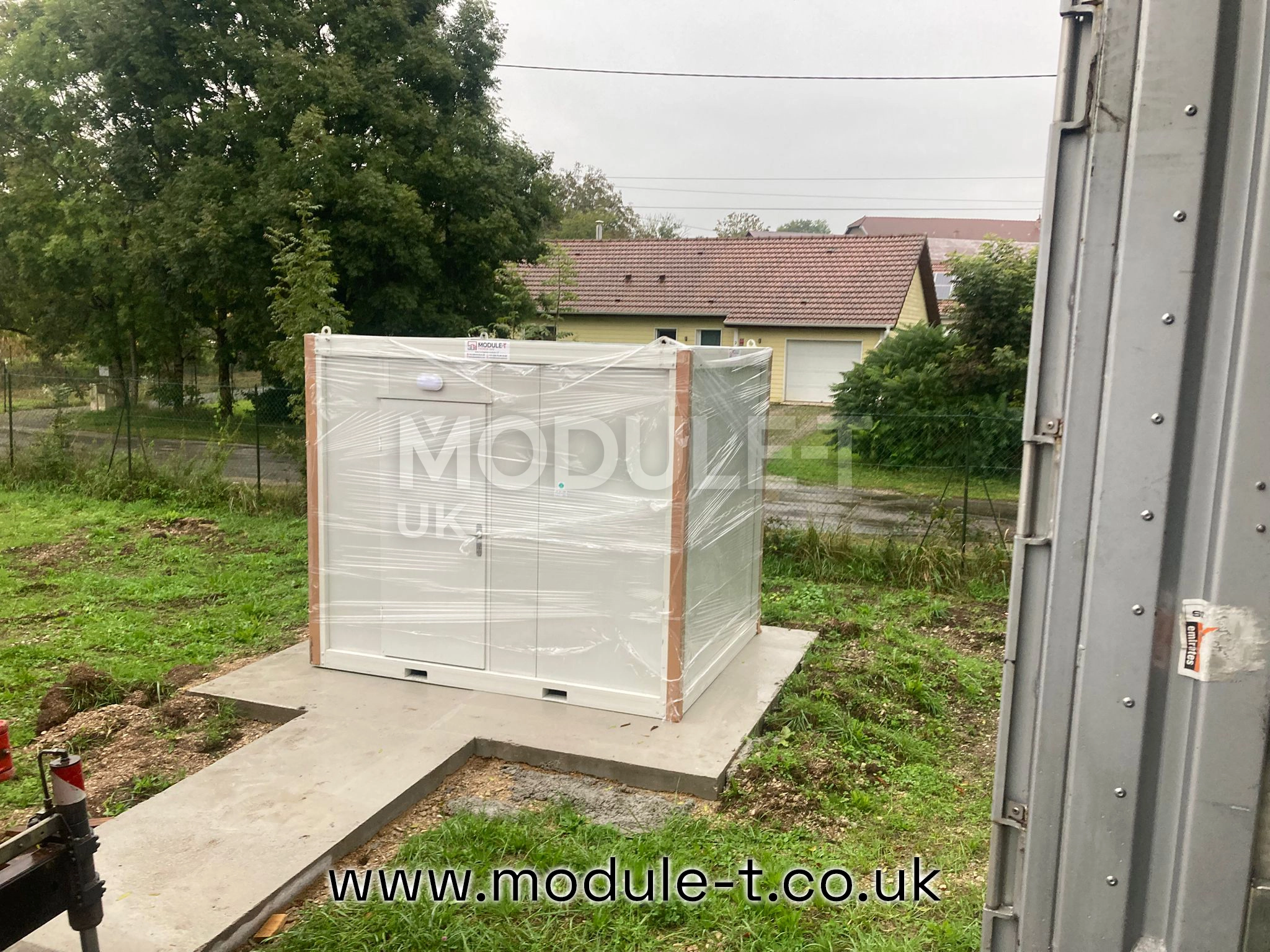
Portable cabin installed on a construction site in the UK
When You Should Expect to Check With the Council
There are several situations where you should assume that planning needs to be checked carefully before installation.
The Cabin Will Stay for Ongoing Business Use
If the cabin is not supporting temporary construction activity but is instead being added as long-term office space, storage support, reception space or staff accommodation, the planning position is more likely to need review.
A common example is a business that wants extra office room in a yard, depot or industrial premises. Even though the structure is a cabin rather than a traditional extension, it may still amount to development that requires planning consideration.
The Site Is Not an Active Construction Project
Portable cabins are used in schools, commercial premises, warehouses, factories, transport yards and public-sector sites. In these settings, the council may need to consider the proposed use, siting, visual impact and how the unit relates to the wider use of the land.
In other words, the fact that the structure can be moved does not remove the need to check planning rules.
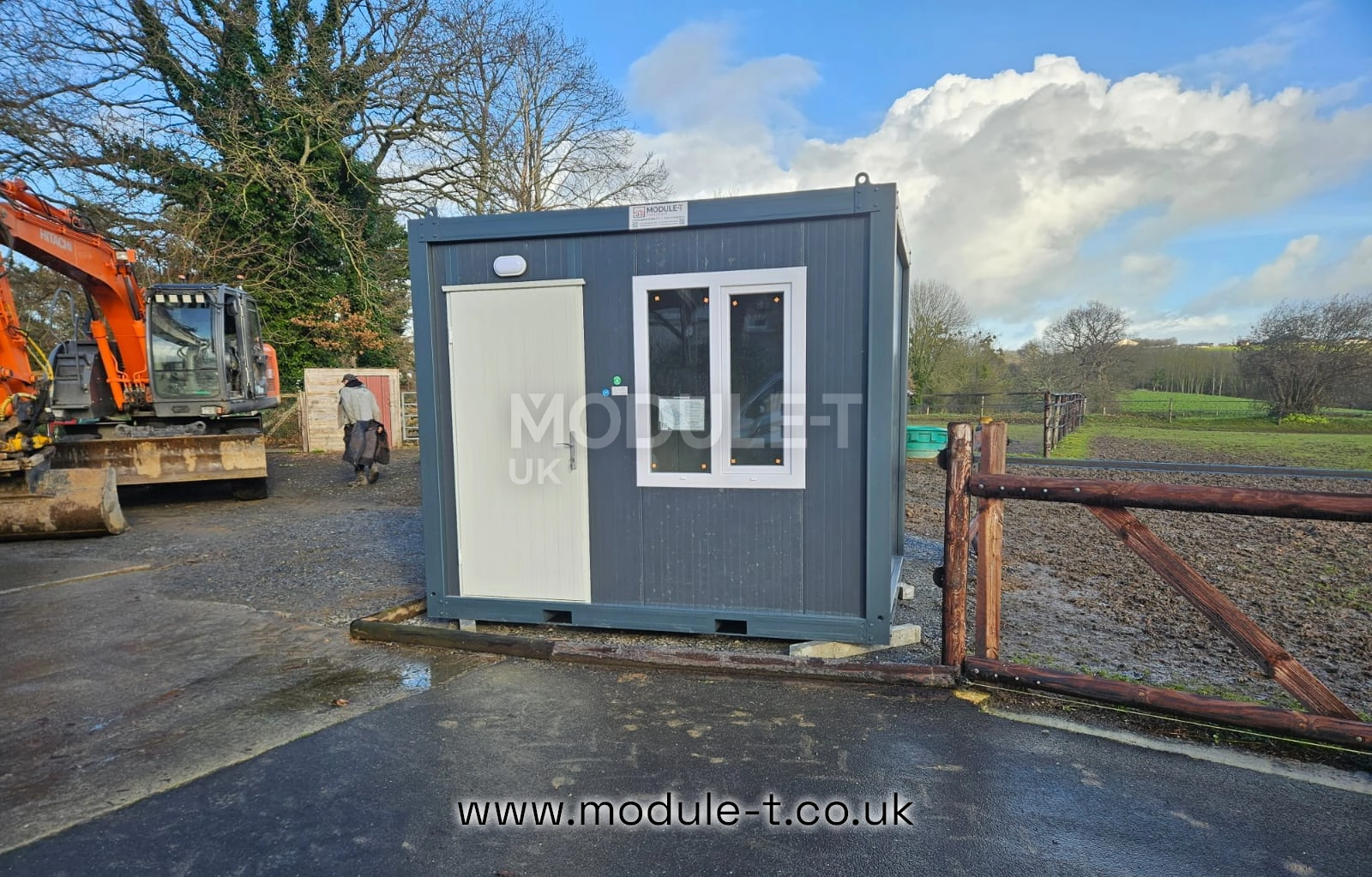
Portable cabin installed at a commercial site in the UK
The Cabin Is Part of a Larger Site Setup
If several cabins are being linked together, stacked, connected to new service areas or installed as part of a broader compound, the project may attract more planning attention than a single standalone unit.
The more permanent the overall arrangement appears, the more important it becomes to review the proposal carefully before delivery.
The Location Has Planning Constraints
Additional restrictions can apply in sensitive or designated locations. Listed buildings, conservation areas and sites with existing planning conditions may all require more careful assessment.
If the site has any unusual planning history or restrictions, it is wise to investigate these before selecting the final unit size and location.
Temporary Does Not Always Mean Short-Term
Another common misunderstanding is the idea that “temporary” simply means a few days or a few weeks. Planning decisions are not usually based on a simplistic time label alone.
What matters more is whether the cabin is genuinely temporary in purpose. A unit that exists only to support construction works during the life of a project is different from one that effectively becomes part of the permanent business setup, even if someone continues to describe it as temporary.
This is why two people can use the same word and still mean very different things in planning terms.
Planning Permission Is Only Part of the Compliance Picture
Even where a separate planning application is not required, other rules may still apply. Businesses sometimes focus so heavily on planning permission that they forget about everything else that can affect the installation.
Depending on the project, you may also need to consider Building Regulations, site access, drainage, electricity, water supply, fire safety and accessibility. A cabin with toilets, showers or washing facilities may require more service planning than a simple office or security unit.
This is one reason why early planning is so useful. The more clearly the site requirements are understood, the easier it becomes to choose the right unit and avoid changes later.
The Rules Differ Across the UK
It is also important to remember that the planning framework is not identical across the whole United Kingdom. England, Scotland, Wales and Northern Ireland have different planning systems and procedures.
That means guidance applying in England should not automatically be assumed to apply in exactly the same way elsewhere. If your project is outside England, or if you are working across multiple UK locations, you should always check the relevant local rules.
What to Prepare Before You Order a Portable Cabin
You do not need to wait until every planning issue is resolved before asking for prices or discussing a layout. However, having the right information ready will make the process much smoother for both your supplier and your planning contact.
Before moving ahead, it helps to confirm:
- the exact site address and postcode
- what the cabin will be used for
- whether it supports active construction works
- how long it is expected to remain on site
- the approximate dimensions required
- where the unit will sit within the site
- whether water, drainage and electricity are needed
- whether the cabin will be standalone, linked or stacked
- how the unit will be delivered and unloaded
This information is useful not only for planning discussions, but also for choosing the correct specification.
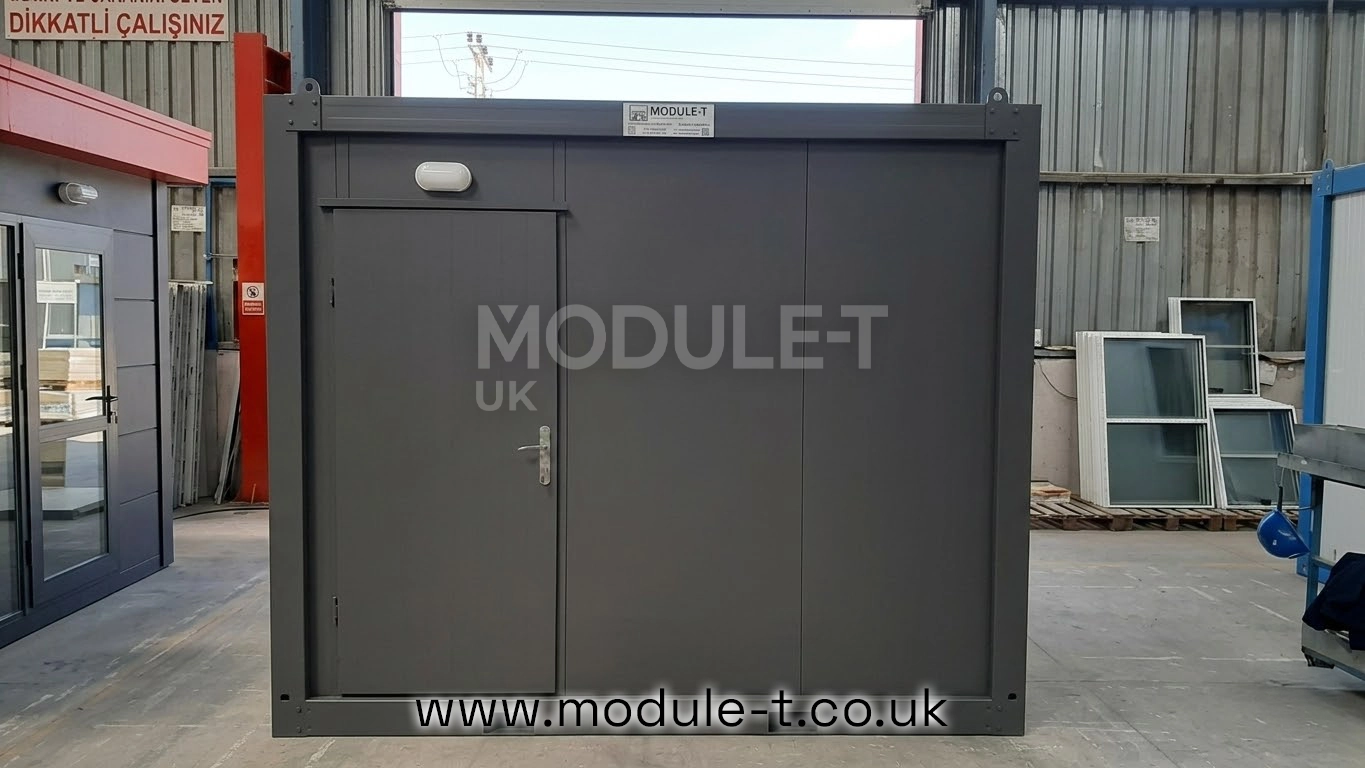
Portable cabin site layout and installation planning
Choosing the Right Cabin Still Matters
Once the planning position is clearer, the next step is to make sure the product itself fits the project properly.
A construction manager may need an office container with workspace and meeting capacity. A site entrance may need a compact security cabin. Workforce welfare may require toilet cabins or changing rooms.
Thinking about the full site setup at the start usually leads to a better result than ordering each unit separately without considering how they will work together on the ground.
How Module-T Can Help
Module-T UK supplies portable cabins and modular buildings for construction, commercial and industrial use across the United Kingdom. Solutions are available in different sizes and configurations, with both pre-assembled and flat-pack options depending on site access and project requirements.
If you are at the early planning stage, technical details such as dimensions, layouts and product information can help you explain the proposal more clearly when speaking to planners, contractors or internal decision-makers.
Explore the full range of portable cabins or contact Module-T UK to discuss the type of unit you need, where it will be installed and how long it is expected to remain on site.
Frequently Asked Questions
Do portable cabins always need planning permission?
No. Some installations may fall within permitted development rights, while others may require a planning application. The answer depends on the circumstances of the site and the proposed use.
Does calling a cabin temporary avoid planning permission?
No. The planning position is not decided by the label alone. The actual purpose, location and duration of the installation all matter.
Can a site office stay after the construction project finishes?
That should be checked carefully. A cabin that was acceptable because it supported temporary works should not automatically be assumed suitable for permanent use afterwards.
Who should I speak to if I am not sure?
The local planning authority should be your first point of contact. If you want formal confirmation that planning permission is not required, a lawful development certificate may also be worth considering.