
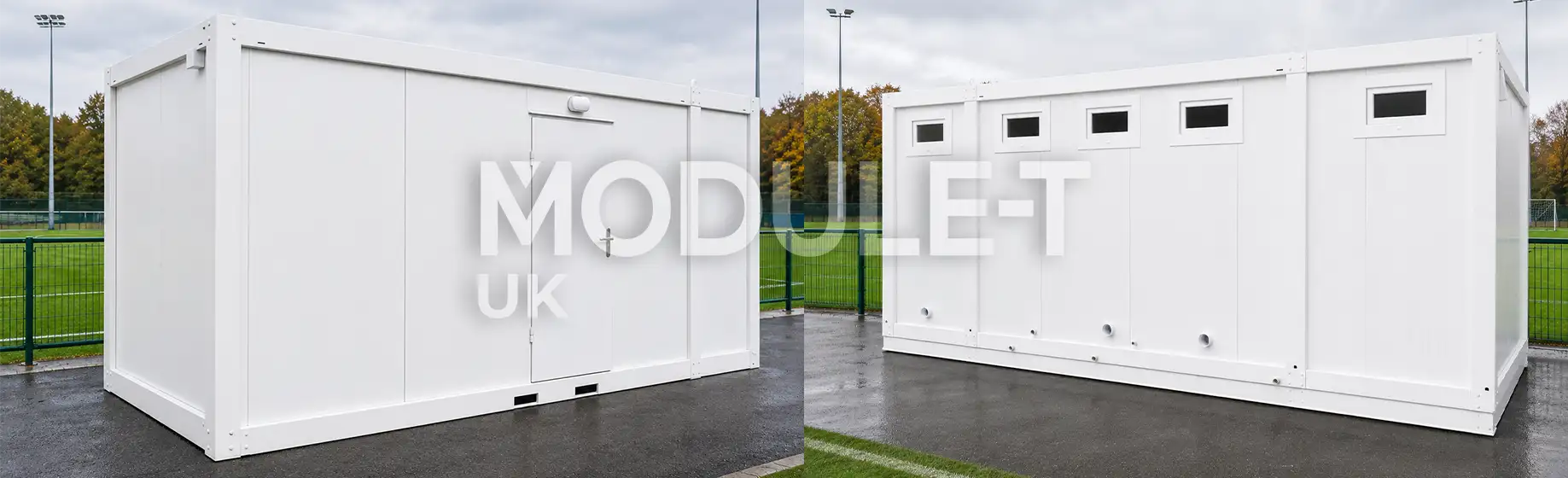
Modular football changing rooms can provide clubs with a practical way to improve player facilities without relying entirely on conventional on-site construction. From grassroots football grounds to training centres and multi-pitch sports facilities, changing accommodation plays an important role in the matchday and training experience.
But a good football changing room requires more than benches and somewhere to store kit. Clubs need to think about team capacity, showers, toilets, privacy, accessibility, officials, ventilation, storage and how the building will be used by different groups throughout the week.
For clubs planning new facilities or upgrading an existing ground, modular construction can offer a flexible route to creating dedicated changing and sanitary spaces. The key is choosing the right layout for the number of players and the level of football the facility is expected to support.
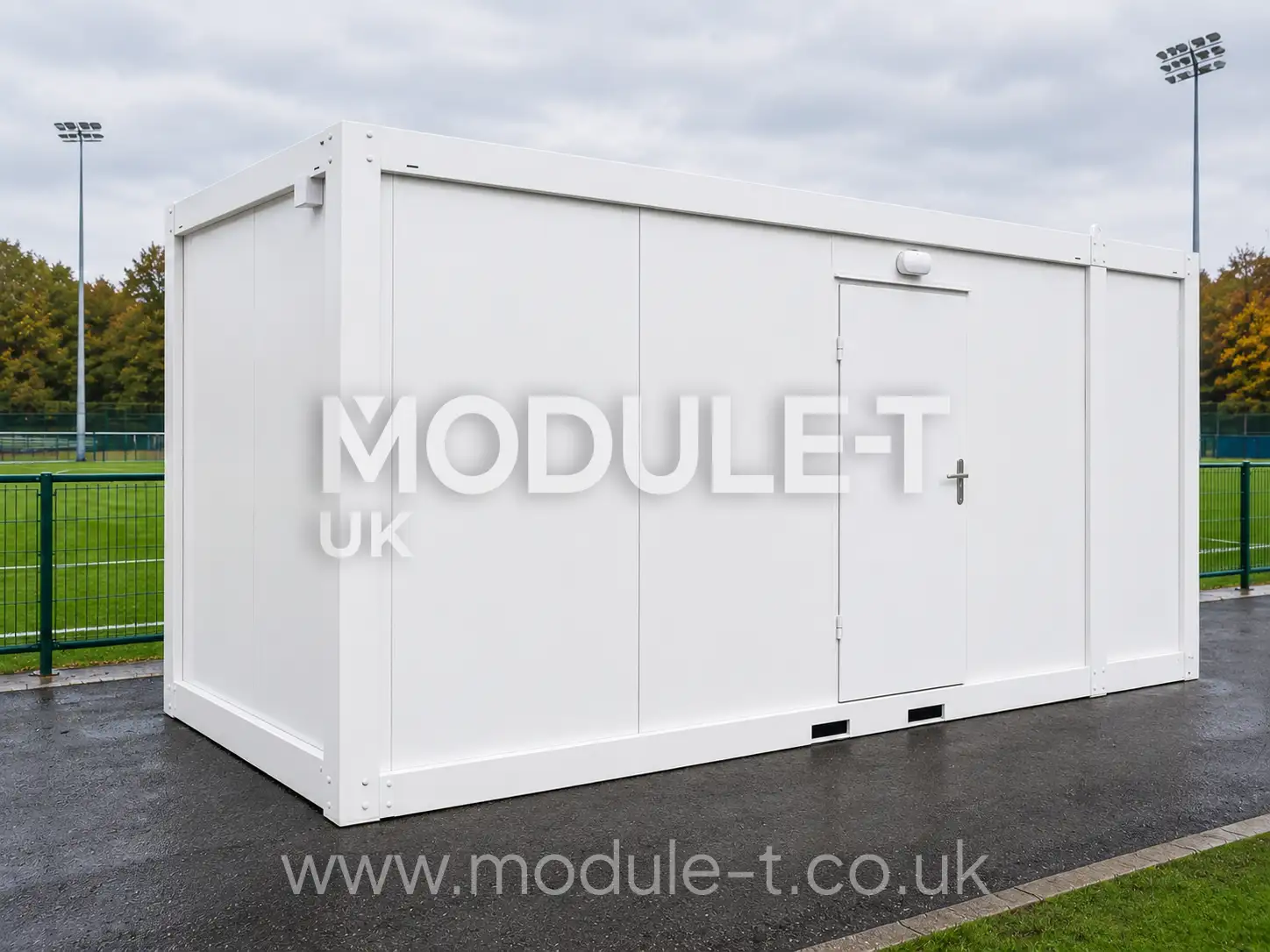
What Should Modular Football Changing Rooms Include?
The exact specification will depend on the club, the number of teams using the site and any league or funding requirements that apply. However, a typical football changing facility may need to accommodate much more than the starting eleven.
Players, substitutes, coaches and support staff all need sufficient space to change and prepare. Depending on the project, facilities may therefore include:
- team changing areas;
- changing benches;
- lockers or secure storage;
- showers;
- toilets and washbasins;
- private changing spaces;
- officials’ changing facilities;
- accessible changing and sanitary facilities;
- ventilation and heating;
- kit and equipment storage.
The layout should allow these different functions to work together without creating unnecessary congestion between players entering, changing, showering and leaving the facility.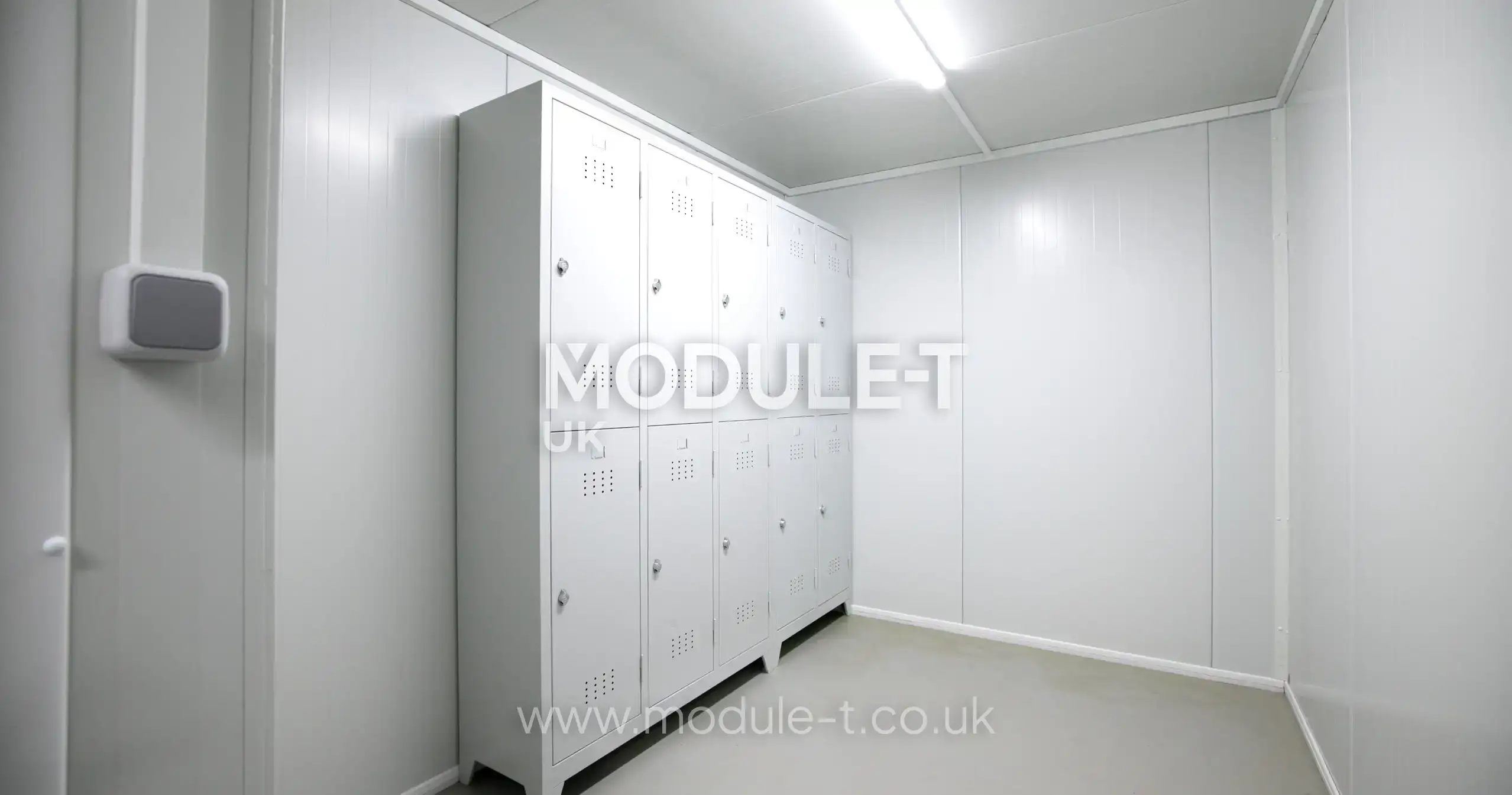
How Large Should a Football Changing Room Be?
Capacity should be one of the first decisions when planning football changing rooms. A room that works for a small training group may be unsuitable for a full matchday squad.
The Football Foundation’s current changing pavilion guidance states that an open-age football team changing area should generally provide 18 m² of changing space, excluding toilets, showers and lobby areas. It also notes that smaller 12 m² changing rooms without showers may be considered at suitable sites where several changing rooms are required, subject to consultation and the overall facility design.
This is an important distinction when considering modular buildings. A standard modular cabin does not automatically constitute a complete Football Foundation-standard team changing facility simply because it contains benches or lockers.
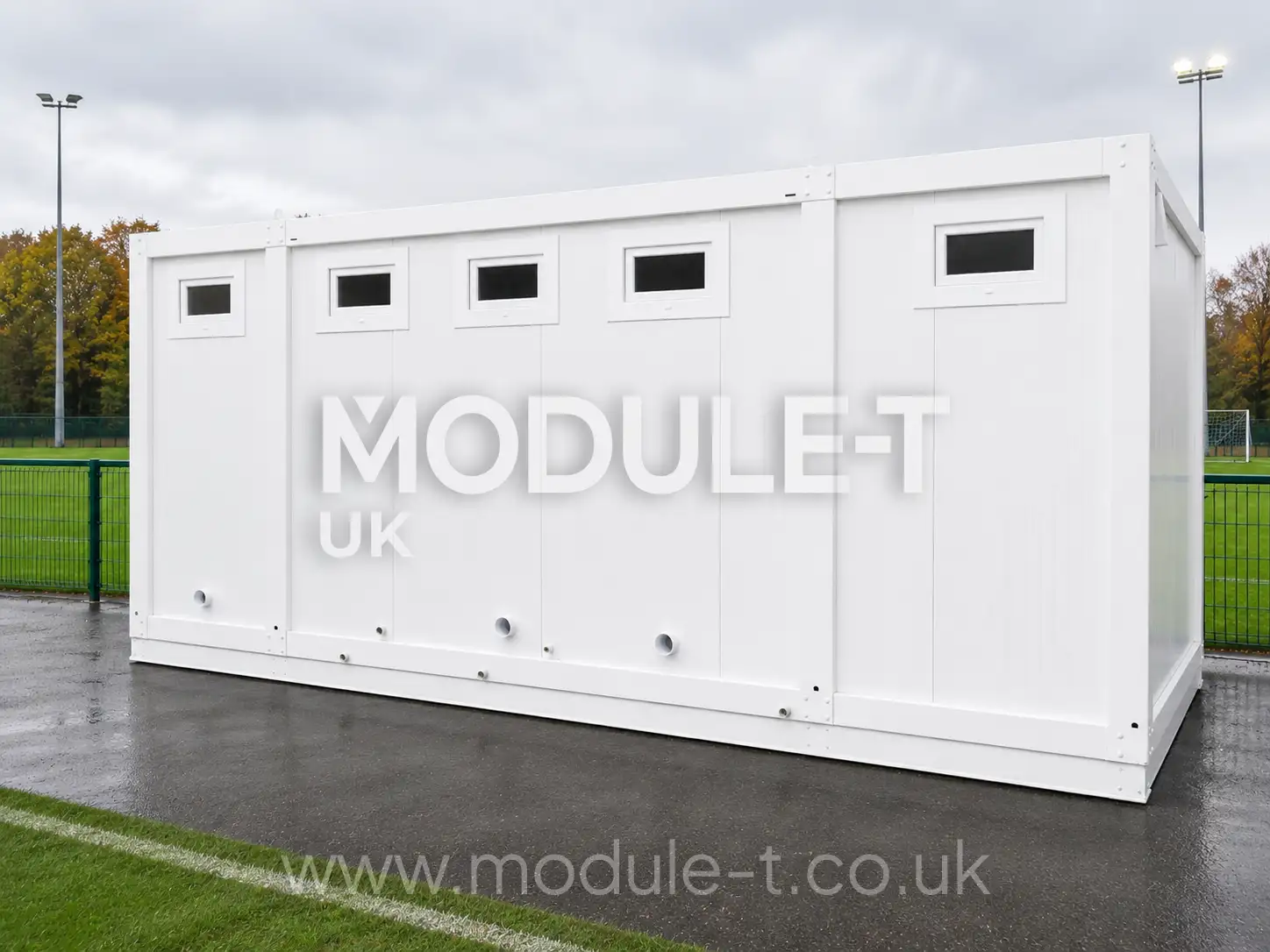
Module-T UK’s current changing room range includes 7.2 m² and 14.4 m² configurations with different changing, locker, shower and sanitary layouts. For larger football projects, several modular spaces or a project-specific configuration may therefore be more appropriate than attempting to fit every function into a single compact cabin.
Benches, Lockers and Kit Storage
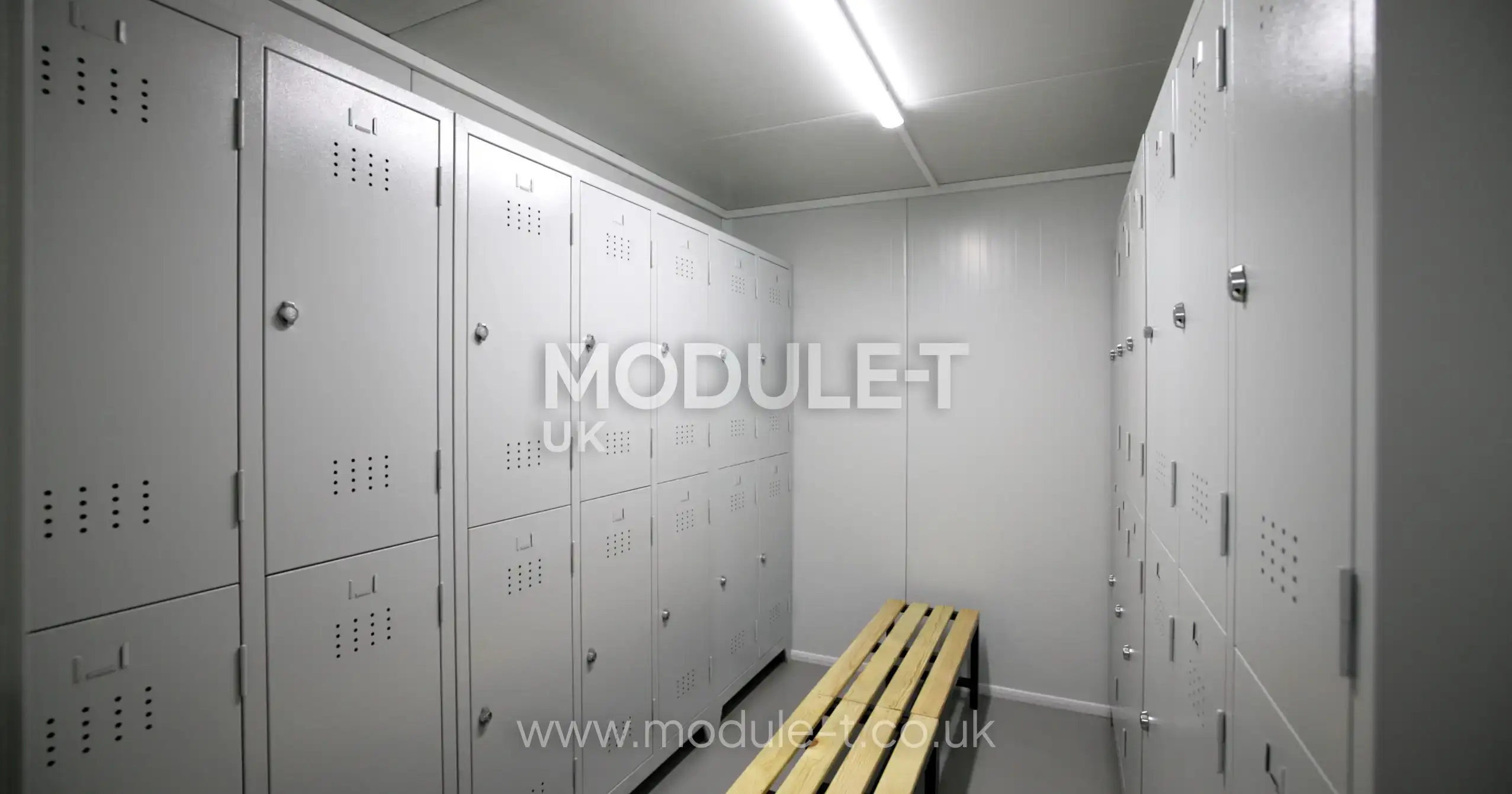
Football changing rooms need enough usable wall and floor space for players to change without crowding one another. Fixed or freestanding benches can help keep the centre of the room clear while providing organised seating around the perimeter.
Storage requirements depend heavily on how the facility is operated. A club using the building only on matchdays may have different requirements from a training centre used by several teams every evening.
Individual lockers can provide secure storage for personal belongings, while separate cupboards or dedicated storage areas may be more suitable for balls, training equipment, medical supplies and team kit.
Module-T UK changing room configurations are available with benches and locker arrangements, allowing the internal space to be adapted around the expected number of users and the intended purpose of the building.
Showers and Washing Facilities
Showers are a major consideration for clubs developing permanent or long-term football facilities. They should be planned alongside the changing room rather than treated as an afterthought.
Football Foundation guidance recommends providing four cubicle showers within each open-age team changing room where possible and advises against open shower designs. This reflects the increasing importance of privacy and making football facilities welcoming to a wider range of users.
A modular solution can separate the dry changing area from the wet area or combine changing and shower facilities within a larger configuration. Module-T UK also offers changing room models incorporating shower areas, as well as separate toilet and shower cabins where a project requires sanitary facilities to be provided in another unit.
Drainage, hot water provision, water supply and ongoing maintenance should all be considered before finalising the location and layout.
Privacy Is Increasingly Important in Football Facilities
Modern football facilities serve men, women, boys, girls, officials and community users. A single traditional open changing room layout may therefore not be appropriate for every club.
The Football Foundation encourages greater choice and privacy within changing facilities. Options can include individual changing cubicles, private shower cubicles and smaller self-contained changing spaces.
For clubs with several teams or a growing women’s and girls’ programme, flexibility can be particularly valuable. The same facility may be used by very different groups during a single weekend, so layouts should be planned around the club’s actual programme rather than a single team profile.
Modular construction can help by allowing different functions to be divided between dedicated units or rooms instead of forcing every user through one shared space.
Do Football Clubs Need an Officials’ Changing Room?
Where matches require referees and other officials, their accommodation should be included at the planning stage.
The Football Foundation recommends a 6 m² changing area for a three-person officials’ room, excluding toilet, shower and lobby areas. It also recommends providing smaller private changing spaces so that players or officials who wish to change and shower privately have an appropriate option.
This is especially relevant when designing facilities that may host men’s, women’s and youth football. Clubs should consider who will use the site now as well as the competitions and teams they hope to accommodate in the future.
Accessible Football Changing Facilities
Accessibility should be built into the design rather than added after the main layout has been completed.
Football Foundation guidance states that internal areas should be easily accessible and highlights considerations including door sizes, corridor widths and disability requirements. Accessible toilets, routes and changing provision may also be required depending on the scale and purpose of the facility.
For larger football hubs and community sports facilities, accessibility may influence everything from the approach to the building to the internal circulation space.
Module-T UK can provide different modular configurations and sanitary solutions, but clubs should establish the relevant accessibility, planning, league and funding requirements for their specific project before approving the final design.
Heating, Ventilation and Everyday Comfort
A football changing room needs to function in January just as effectively as it does in August. Insulation, ventilation and heating should therefore be considered alongside the internal layout.
Wet clothing, showers and large groups of players can quickly increase humidity inside a changing facility. Effective ventilation helps manage moisture and maintain a more comfortable environment, while suitable heating is important during colder months.
Module-T UK changing room units can incorporate insulated modular construction, electrical installations, ventilation and heating options. The specification can be selected according to the intended use and site conditions.
Durable and easily maintained internal finishes are also useful for facilities expected to experience frequent training sessions and matchday use.
Why Consider Portable Football Changing Rooms?
Portable football changing rooms can be particularly useful where a club needs additional capacity, is developing a new pitch or wants to improve facilities without immediately constructing a conventional permanent clubhouse.
Because much of the building work takes place within a controlled manufacturing environment, modular units can arrive on site with a significant proportion of the structure and internal fit-out already completed.
Modular construction also offers flexibility. A club might begin with separate changing and sanitary units and develop the facility further as player numbers, funding or site requirements change.
That does not mean every modular building is automatically suitable for every football ground. The final solution still needs to take account of planning requirements, utilities, foundations or supporting ground conditions, access for delivery and any technical criteria imposed by leagues, funding bodies or local authorities.
Football, Rugby and Other Sports Facilities
Although football is the focus of this guide, modular changing rooms can also support rugby clubs, athletics facilities, training grounds, schools, leisure centres and other outdoor sports.
The required layout may differ between sports, but the basic priorities remain similar: enough changing space, practical circulation, appropriate sanitary facilities, privacy, storage and a comfortable environment for users.
For multi-sport venues, flexibility becomes even more important because the facility may need to accommodate different team sizes and patterns of use throughout the week.
Planning a Modular Changing Room Project
Before requesting a quotation for modular football changing rooms, clubs should establish how many teams will use the facility, the maximum number of people expected in each room and whether separate facilities are needed for officials or different user groups.
It is also useful to identify requirements for showers, toilets, accessible provision, lockers, benches, heating and storage before choosing the number and size of modules.
Where the project is connected to a Football Foundation funding application or a particular league requirement, those criteria should be reviewed at an early stage. The Football Foundation provides detailed guidance for clubs considering new changing pavilions, extensions and refurbishments.
Starting with these requirements makes it easier to determine whether a standard changing room cabin is sufficient or whether a larger, multi-module or bespoke configuration should be developed.
Frequently Asked Questions About Modular Football Changing Rooms
Can modular buildings be used as football changing rooms?
Yes. Modular buildings can provide changing, locker, shower and sanitary facilities for football clubs and sports grounds. The final configuration should be selected according to capacity, site conditions and any relevant competition, planning or funding requirements.
Can showers be included in a modular changing room?
Yes. Module-T UK offers changing room configurations with integrated shower areas, while separate shower and sanitary cabins are also available for projects where these functions need to be divided between units.
Are football changing rooms available with lockers and benches?
Yes. Module-T UK changing room layouts can incorporate benches and locker storage. The appropriate arrangement depends on the number of users and the amount of equipment that needs to be stored.
Can several modular units be combined for a football club?
Yes. Projects that require larger team changing areas, separate showers, toilets, officials’ facilities or additional rooms can use multiple modular spaces according to the required layout.
Are modular changing rooms only suitable for football?
No. Similar modular facilities can be used for rugby, athletics, schools, training centres, leisure facilities, outdoor events and other sports applications.
Explore Module-T UK Changing Rooms for Sports Facilities
A successful football changing facility starts with the right capacity and layout. Team areas, showers, toilets, privacy, storage, accessibility and everyday comfort should all be considered before selecting the building configuration.
Module-T UK supplies modular changing rooms in different sizes and layouts, including configurations with benches, lockers, showers and sanitary facilities. For football clubs and sports organisations requiring a larger or more specialised setup, different modular units can be planned around the needs of the project.
Explore the Module-T UK changing room range or contact Module-T UK to discuss the capacity, layout, location and facilities required for your sports project.